
Shri Gajanan Mhatre:

Shri Gajanan Mhatre
Mr. Gajanan Keshav Mhatre was born in a small village near Pen in Raigad district. Destiny tested him very early in life—he lost his father when he was barely two months old. In an era when widows and their children were often left vulnerable, his maternal grandfather, a man far ahead of his time in thought and compassion, made a courageous decision. Understanding both social realities and human dignity, he brought his widowed daughter and infant grandson back to his own home after a few months.
A farmer by occupation, the grandfather was not wealthy, yet he possessed about ten acres of paddy fields. Through sheer discipline, foresight, and sacrifice, he ensured that his grandson received a proper education. Despite limited means, he supported Gajanan’s studies up to matriculation, laying the foundation for a life shaped by perseverance and values.
After completing his matriculation, Gajanan migrated to Mumbai, like countless young men seeking opportunity. He stayed in Thane with a distant cousin and soon secured employment as a clerk in the Time Office of the Indu Group of textile mills at Byculla. Following his marriage in 1942, he moved into a single-room chawl at Parel, close to KEM Hospital, and began building a modest but stable life.
Around this time, destiny quietly introduced him to a powerful spiritual current. Dadasaheb Khade of Sion, a devoted disciple of Bhagavan Nityananda and Shri Janananda Baba, conducted weekly bhajans every Thursday on the terrace of his bungalow. Dadasaheb’s wife was the eldest sister of Gajanan’s wife, and through this close familial bond, Gajanan became part of the satsang circle. From 1942 onward, he began regularly visiting Ganeshpuri, accompanied by the group. Gradually, many members of his wife’s extended family—brothers, sisters, and cousins—were also drawn into this sacred fold.
A defining moment arrived on 7 October 1946, when a union leader from his textile mill advised him, almost casually, to attend a walk-in interview the following day for a clerk’s position at Stanvac Oil Company, an American firm based at Ballard Estate. Gajanan attended the interview dressed in his usual mill attire—a cotton shirt, long-sleeved coat, and a white cotton loose lehenga. Upon arrival, he found himself surrounded by candidates in formal Western attire—shirts, trousers, neckties—many of them graduates, despite the post requiring only matriculation. He also learned that the interviewer was an American.
Coming from a small village and educated in a vernacular Marathi medium, with limited exposure to spoken English, he felt deeply anxious. His professional world until then had been largely Marathi- and Hindi-speaking. Overwhelmed, he silently prayed to Baba, invoking His presence and grace during the interview.
When he entered the cabin, the interviewer posed a couple of logical and mathematical riddles, delivered in a distinctly American style. Calm descended upon him. With Baba’s grace, Gajanan answered both questions correctly. To his own surprise, he was selected on the spot. When asked about his expected salary, his innate simplicity surfaced—he requested ₹110, exactly what he earned at the textile mill. An appointment letter was issued the same day.
Straight from Ballard Estate, he went to Ganeshpuri and placed the appointment letter before Bhagavan Nityananda, seeking guidance. Baba instructed him clearly to join Stanvac. In a striking turn of events, soon after he joined, the Indu Group mill became the first textile mill in Mumbai to shut down, confirming the silent protection at work.
Gajanan went on to serve the organization with dedication for thirty years. Over time, Stanvac became ESSO, and later, in March 1974, it was nationalized as Hindustan Petroleum Corporation Limited (HPCL). He retired in 1975 as a Senior Clerk.
Throughout his career, he was known for his sincerity, honesty, and tireless work ethic. Ever willing to help, humble in conduct, socially aware yet unassuming, he earned deep respect from colleagues. In the office, people fondly referred to him as “Devmanus”—a man of goodness—reflecting not just his character, but the quiet grace that guided his life.
This episode is not merely a story of professional success; it is a living illustration of Bhagavan Nityananda’s teaching on Kāl (destiny), Vel (right timing), and Yog (divine convergence).
1. Kāl — The Ripening of Destiny
Gajanan Mhatre’s early life was shaped by hardship: the loss of his father in infancy, limited resources, rural upbringing, and vernacular education. None of these were obstacles to be overcome prematurely; they were conditions of destiny that had to mature.
For years, his karmic path kept him in the textile mill—not as a limitation, but as a holding pattern. That phase gave him discipline, humility, and grounding. Until destiny ripened, no effort—however sincere—could have altered his trajectory.
Kāl does not hurry, nor does it forget.
It waits until the individual is inwardly ready.
2. Vel — The Moment That Cannot Be Manufactured
The advice to attend the Stanvac interview did not come through planning or ambition. It arose casually—from a union leader—on one specific day, pointing to one specific interview, scheduled for the very next morning.
That moment was Vel.
Not earlier—when he lacked exposure.
Not later—when the mill would shut down.
Exactly then.
Vel cannot be scheduled by the intellect. It announces itself suddenly and vanishes just as quickly. Gajanan neither sought the opportunity nor delayed responding to it. He simply stepped into the moment when it arrived.
3. Yog — The Invisible Alignment
Everything that appeared unfavourable on the surface turned out to be Yog in disguise:
-
His simple attire among formally dressed candidates
-
His lack of English fluency before an American interviewer
-
Logical riddles instead of language-heavy questioning
-
His innocence in asking for the same salary he already earned
None of this was a coincidence.
Yog is not created by confidence—it is orchestrated by grace.
Most significantly, Yog expressed itself through inner remembrance. His silent prayer to Baba during nervousness aligned his mind, intelligence, and circumstance into one seamless flow. From that point onward, events moved without resistance.
4. After the Event — Recognition of Kāl at Work
Only later did the larger design reveal itself:
-
The textile mill he left became the first to shut down in Mumbai
-
The organisation he joined not only survived but also evolved into a national institution
-
His service continued steadily for three decades without disruption
This retrospective clarity is characteristic of Kāl.
Destiny explains itself only after it has fulfilled its purpose.
5. Guru Kripa — The Axis of All Three
While Kāl sets the condition, Vel opens the door, and Yog completes the action, Guru Kripa stands at the centre, holding all three in balance.
Bhagavan Nityananda did not interfere loudly.
He did not promise success.
He simply confirmed the direction: “Join Stanvac.”
That single instruction aligned destiny, timing, and circumstance.
Thus,
From this episode, the following truths emerge:
-
Destiny does not respond to anxiety
-
Right timing cannot be forced
-
Grace works most powerfully when the ego is least assertive
-
Simplicity invites protection
-
The Guru acts before the devotee understands the need
Above all, this life demonstrates that when Kāl matures, Vel presents itself, and Yog activates—effort becomes secondary and grace becomes decisive.
What appears outwardly as a career shift is inwardly a lesson in surrender.
And that is why such lives are not dramatic—but deeply instructive.
My family and Shri Gajanan Mhatre
I have briefly mentioned Shri Gajanan Mhatre in my book, but his steadfast devotion and deep connection to Bhagavan Nityananda deserve to be remembered in greater detail. He was my father’s Guru Bandhu—a fellow disciple walking the same path under the grace of Bhagavan. His association with Bhagavan began through a close relative, Shri Baburao Khade, a devout and long-standing devotee of Bhagavan.
From the beginning, Shri Gajanan Mhatre was an unwavering and disciplined devotee, deeply immersed in the divine presence of Bhagavan. He frequently visited our home in Bombay, primarily to meet my father, and their meetings were always saturated with heartfelt recollections of Bhagavan’s Leelas—divine play and grace manifesting in myriad ways. Whenever he visited, I would make it a point to sit and listen attentively. Their conversations would often stretch for hours, filled with reverence, awe, and gratitude. These satsangs were not just exchanges of memories, but moments of inner transformation for me, as I silently absorbed the essence of their bhakti.
Each year, on Diwali, Shri Gajanan Mhatre made it a tradition to come to our home for Paduka Darshan—to bow before the golden Saguna Padukas of Bhagavan that we worshipped with great reverence. His devotion was simple, quiet, but deeply rooted in surrender.

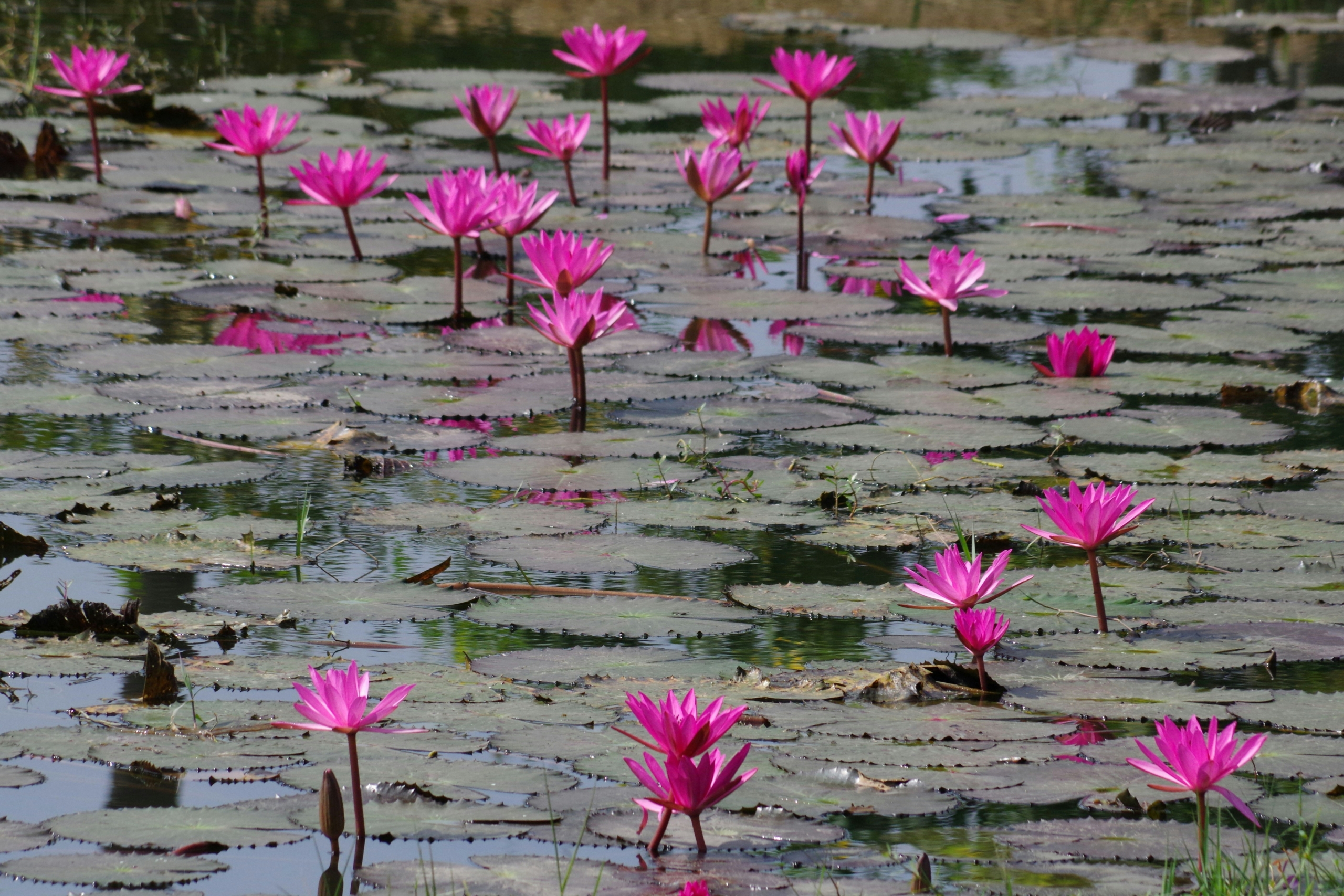
One remarkable incident from his life stands as a testament to Bhagavan’s grace and omnipresence. Once, during a visit to Kanhangad Ashram, his young daughter insisted on having a lotus flower from the pond beside the Ashram. It was common knowledge among the devotees that the pond was infested with crocodiles, and entering it was dangerous. Yet, moved by his daughter’s persistent plea and love, Shri Gajanan eventually stepped into the pond to pluck a lotus for her.
To everyone’s horror, a crocodile suddenly emerged from the water and was about to seize his leg in its powerful jaws. In that terrifying moment, Shri Gajanan instinctively cried out, “Baba!”—calling on Bhagavan Nityananda from the depths of his heart. Miraculously, the crocodile let go and slipped back into the water, vanishing without a trace. Shri Gajanan emerged completely unharmed. While this was happening, Shri Vidyadhar Patil, Shri Mhatre’s brother-in-law, was in Ganeshpuri. Suddenly, Bhagavan Nityananda started shouting andsaid to Vidyadhar Patil, “Why does Gajanan have to get into the water? It is foolish to do so; it is infested with crocodiles.”
This incident, though terrifying, became another Leela of Bhagavan’s divine protection. When Shri Gajanan later went to Ganeshpuri, Bhagavan, without anyone telling Him, admonished him gently. With a look that pierced beyond the physical, Bhagavan told him he should not have entered the crocodile-infested pond, knowing the risk it held. In those few words, it became clear—Bhagavan had known all along, had intervened, and had protected His devotee in that critical moment. It was only by Bhagavan’s grace that Gajanan Mhatre came out unscathed.
From then on, Shri Gajanan became even more deeply absorbed in Bhagavan, holding Him as his sole refuge and anchor. He continued his life in quiet devotion until he passed away in 1986, forever remembered by those who knew him as a sincere, humble, and blessed soul who had experienced the living grace of the Master.
.

Gajanan Keshav Mhatre
Birth date 22-8-1918
Date of Death 20-7-1986


There are 4 comments on this post
it is like Gajendra calling Lord Narayana
Dear Nagesh,
My Namaskara to Gurudeva. My namaskara to you. Yes, like Gajendra calling to Narayana. Here one things is different. Gajendra needed water to drink, it was necessity. There Crocodile caught him and he sought God's intervention. Knowing that the road is through jungle with minimum human support and 2 hours drive a young girl with old mother with some 7 years old car is like testing God. Similarly when there are good transports to travel, going by foot as a penance can be a foolhardy for which we trouble our God.
In His Prem,
Gopalkrishna
This is the best example of the devotee's faith in his Guru and the Guru's care and love for his devotee.
Lalitaji, thank you for your responce. It is difficult to write about Bhagavan Nityananda, but we can get a glimpse of Bhagavan's greatness through the experiences of His devotees.
Thank you.