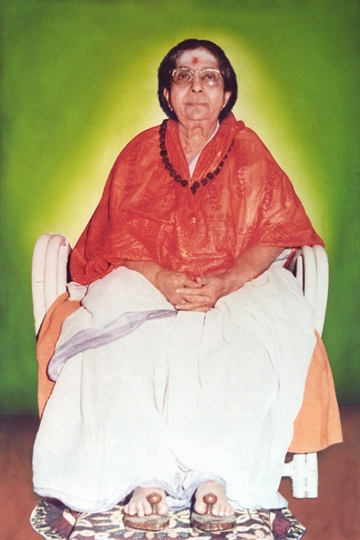


– SELF SURRENDER –
I dare not ask either for crosses or consolation,
I simply present myself before Thee,
I open my heart to Thee,
Behold my needs, which I know not myself,
See and do according to Thy tender Mercy!
Smite or heal, depress me or raise me up,
I adore all Thy purposes without knowing them.
I am silent, I offer myself in sacrifice
I yield myself to Thee
I would have no other desire than to accomplish Thy will
Teach me to pray, to pray Thyself in me!
This poem, Self-Surrender by Lalita Mauli, is a deeply devotional and Vedantic offering of the soul to the Supreme, written in the spirit of total humility and surrender at the Lotus Feet of Bhagavan Nityananda. It beautifully captures the essence of Sharanagati—the complete relinquishment of personal will to the Divine Will—and echoes the core teachings of saints and scriptures, especially those who emphasised the power of Guru Kripa (Grace of the Guru) and Bhakti (devotion).
“Oh Lord, I know not what I ought to ask of Thee / Oh Father, give to Thy child, which he himself knows not how to ask,”
This opening is soaked in the humility of a true Bhakta (devotee). The poet acknowledges that human understanding is limited, and that even in prayer, we may not know what is truly good for us.
This reflects a core idea in Vedanta and Bhakti traditions—that our ego often clouds our judgment. Instead of asking for specific things (which may arise from egoic desires), the poet offers complete trust in the Divine’s superior understanding.
Like in the Bhagavad Gita (18.66), where Shri Krishna says:
“Sarva-dharmān parityajya mām ekaṁ śaraṇaṁ vraja…”
Abandon all varieties of dharma and just surrender unto Me; I shall deliver you from all sin—do not fear.
“I dare not ask either for crosses or consolation, / I simply present myself before Thee,”
Here, the poet takes a bold vow of non-demand, neither praying for relief from suffering (consolation) nor asking for hardships (crosses) to build endurance. This is profound detachment (vairagya).
To present oneself before the Lord is to lay down one’s entire being, without expectation—an act of absolute surrender (Atma Nivedanam), one of the nine limbs of Bhakti.
“I open my heart to Thee, / Behold my needs, which I know not myself, / See and do according to Thy tender Mercy!”
There is vulnerability here, not in weakness, but in trust. The poet recognises that divine compassion knows best. The devotee places the burden of discernment entirely on Bhagavan.
This recalls Bhagavan Nityananda’s own statement in the Chidakasha Gita:
“When the heart is pure, all things are pure. When the heart is full of bhakti, God will take care of everything.”
“Smite or heal, depress me or raise me up, / I adore all Thy purposes without knowing them.”
This is the essence of Ishwara Pranidhana (surrender to God’s will). Whether joy or sorrow, health or pain—whatever Bhagavan sends is accepted as divine prasad. The poet doesn’t demand knowledge of the reason; they only offer worship through acceptance.
It’s similar to the state of a Jnani, who sees the world as Leela (divine play), and everything as perfect in the Divine Order.
“I am silent, I offer myself in sacrifice / I yield myself to Thee”
Silence here is not just physical—it is mental stillness, a dissolution of will. This is akin to mauna, the sacred silence spoken of by sages like Ramana Maharshi.
To offer oneself in sacrifice is to burn the ego in the fire of surrender—what Bhagavan Nityananda called ‘Tyaga’, the highest renunciation.
“I would have no other desire than to accomplish Thy will / Teach me to pray, to pray Thyself in me!”
The devotee now prays not even to pray from their own mind, but for the Lord to pray through them. This is sublime.
This line reflects the deep truth that in total surrender, even prayer becomes a movement of the Divine within. The devotee becomes an instrument—a flute through which the breath of the Divine plays.
It’s also reminiscent of what Nityananda once told a devotee who could not concentrate in meditation:
“Don’t worry. Just sit. Let God meditate you.”
This poem is a love letter of the soul to the Supreme, sung from the heart of a devotee who has laid down all pretensions, desires, and control, and now stands before the Lord—open, empty, surrendered, and ready.
It expresses:
-
Humility (I do not know)
-
Faith (You know best)
-
Vairagya (no demand for comfort or suffering)
-
Sharanagati (I yield myself to Thee)
-
Sudha Bhavana (pure perception, where even prayer is no longer ‘mine’)
In the light of Bhagavan Nityananda’s teachings, this poem is not merely a prayer—it is a state of being. A state where one lives as a hollow reed, allowing the Guru’s grace and the Supreme Self to shine through.

– INTUITION –
Do not fret or fume over the present, Neither brood over the past,
Nor think much of the future.
To cleanse the mind just give a start
Watch well and never let it halt,
Until it learns to play its part,
In the journey of forward march.
0 wisdom! From whence do thou springeth?
The words of knowledge in the ears ringeth,
Mind dissolves and wisdom cometh
Knowledge deepens and the soul swimmeth,
Freely and blissfully in the everlasting light
Gaily the soul riseth as a kite
From the bottom of the heart flows devotion
Lifting the soul into sweet salvation!
This second poem by Lalita Mauli, titled “Intuition”, is a luminous reflection on the inner journey of the soul, from ignorance and restlessness to the light of wisdom and ultimate salvation. Written in rhythmic, evocative verse, the poem blends the practical guidance of a sadhana path with the mystical beauty of spiritual awakening, echoing again the silent teachings of Bhagavan Nityananda.
“Ah ye the soul ignorant / Do not fret or fume over the present, / Neither brood over the past, / Nor think much of the future.”
The poem begins like a gentle admonishment to the human soul lost in Maya (illusion). These lines resonate with the Bhagavad Gita’s teaching on equanimity and detachment from time-bound anxieties.
Bhagavan Nityananda often emphasised:
“Be in the present. Do your duty. Don’t worry.”
The ‘ignorant soul’ is caught in the web of time, regretting the past, fearing the future, and missing the now. The poet calls for vairagya, for stepping out of this wheel.
“To cleanse the mind, just give a start / Watch well and never let it halt, / Until it learns to play its part, / In the journey of forward march.”
This is a call to self-effort—Sadhana. To “just give a start” is both humble and powerful. You don’t need perfection to begin—just begin.
The mind, when watched continuously (as in self-awareness or mindfulness), begins to understand its role—not as master, but as servant.
This is pure Jnana Yoga, the path of discrimination and vigilance. The “forward march” hints at evolution—the spiritual unfolding of the being.
It also reflects Chidakasha Gita verses where Bhagavan Nityananda advises:
“First step is watching the mind. Second step is understanding it. Third step is transcending it.”
“O wisdom! From whence do thou springeth? / The words of knowledge in the ears ringeth,”
Here, intuition is celebrated as Wisdom Itself (Jnana)—but not learned through books. It springs forth. That is:
Wisdom arises from within, as a flowering. As the Upanishads say:
“Na medhayā na bahunā śrutena” – Not by intellect, nor by much learning does the Self reveal Itself.
This is the turning point of the poem—where outer struggle starts turning inward, and a higher light begins to shine.
“Mind dissolves and wisdom cometh / Knowledge deepens and the soul swimmeth, / Freely and blissfully in the everlasting light”
Here the poem enters mystical territory. The dissolution of the mind is a key event in yogic awakening. It’s the end of thought, the beginning of Chidakasha (pure awareness).
This is exactly what Bhagavan Nityananda referred to in countless teachings:
“Where there is no mind, there is bliss. Where there is bliss, there is God.”
The metaphor of the soul swimming in light evokes Samadhi, the union with the Infinite. The knowledge here is no longer mental—it is experiential, direct, and blissful.
“Gaily the soul riseth as a kite / From the bottom of the heart flows devotion / Lifting the soul into sweet salvation!”
These final lines bring Bhakti into the poem, uniting it with Jnana.
The kite imagery is beautiful—the soul is light, free, rising with the wind of Grace and inner purity. Not forced, but surrendered.
And where does this rise begin?
“From the bottom of the heart.”
That’s where Bhakti lives—not in intellect but in sacred feeling, in Sudha Bhavana (pure perception).
Devotion here is not emotional dependence—it is the natural fragrance of a heart turned toward the Source.
And the fruit? Sweet salvation—not some distant afterlife promise, but the soul’s awakening to its own divine nature.
Lalita Mauli’s Intuition is a poetic map of the journey from:
-
Ignorance to Awareness
-
Mind to Stillness
-
Knowledge to Wisdom
-
Effort to Grace
-
And finally, Jnana to Bhakti
It’s a song of transformation, resonant with the unspoken teachings of Bhagavan Nityananda, who stood in silence yet awakened countless souls.
This poem is a reminder that intuition is not a faculty of the mind, but a flowering of the Self, born when the heart is stilled, the mind is watched, and the inner light is allowed to rise.


