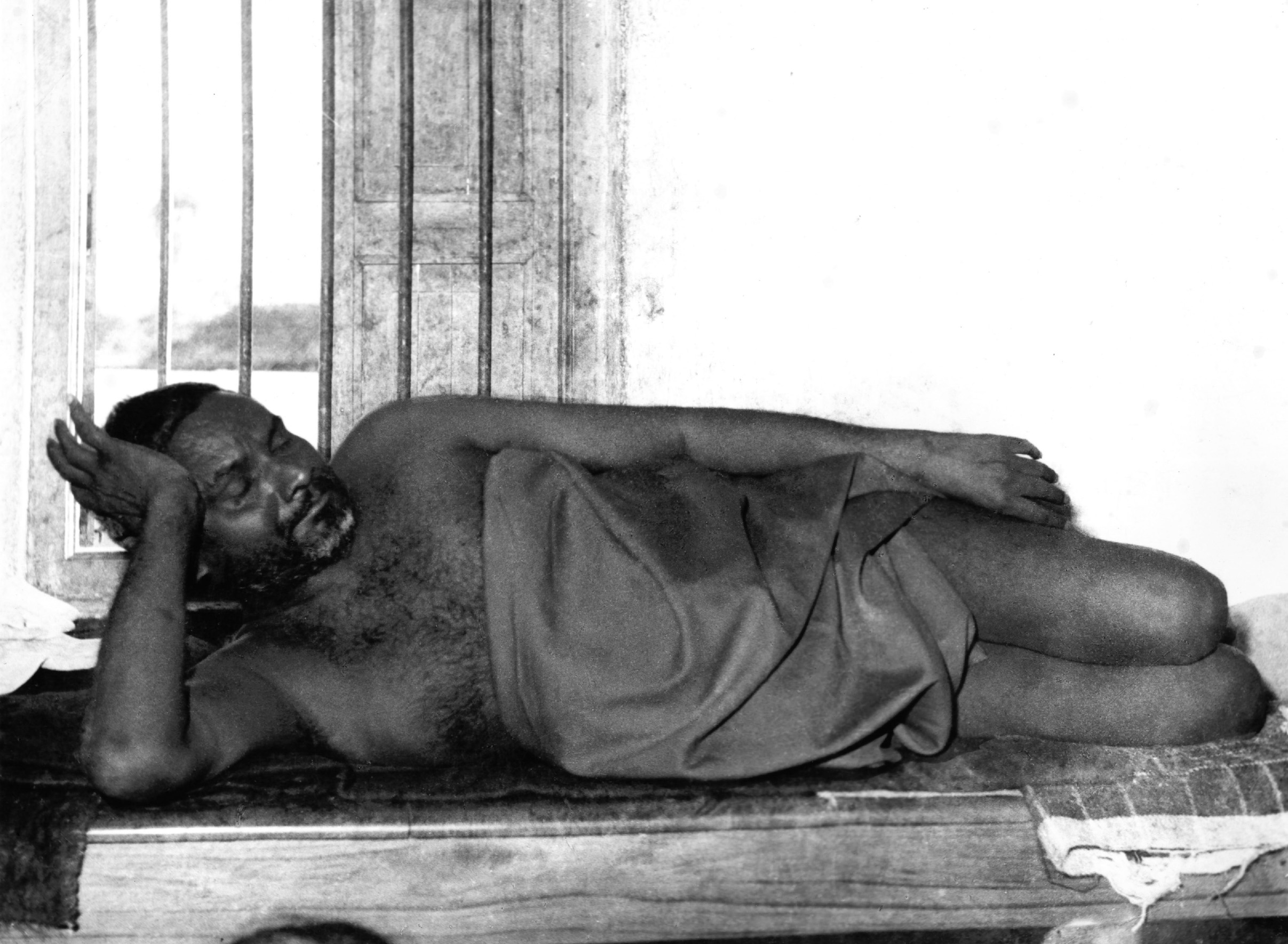

Atmachintan and Abhyasa Yog

Bhagavan Nityananda often uttered that Sudha Bhavana—the purified and luminous inner attitude—is not born by mere intellectual conviction, but through inner work, through the fusion of Atmachintan (Self-inquiry) and Abhyasa Yog (steadfast practice).
Shree Muktabai says in her abhang addressed to her brother Shree Dnyaneshwar Maharaj:
एक आपण साधू झाले।
येर कोण वाया गेले ? ॥१॥
उठे विकार ब्रह्मी मूळ।
अवघे मायेचें गबाळ ॥२॥
माय समूळ नुरे जेव्हां।
विश्व ब्रह्म होइल तेव्हां ॥३॥
ऐसा उमज आदिअंतीं।
मग सुखी व्हावे संती ॥४॥
चिंता क्रोध मागे सारा ।
ताटी उघडा ज्ञानेश्वरा ॥५॥
Ekh Apan Sadhu Jhale, Yer Kon Vaya gele ||1||
You attained wisdom, but did others waste away?
Uthe Vikar Brahmi Mul, Awaghe Mayechi Ghabal ||2||
Such thoughts are ripples that gather worldly storms in the mind.
Maya Samul Nurve Jevhan, Vishwa Brahma Hohil Thewan ||3||
Rid your mind of illusions and see the world pure and simple.
Aisa Umaj Adhi Ananti, Magh Sukhi Vhave Santi ||4||
Let this truth accompany the beginning and end of every thought; then those who seek to find bliss eternal.
Chinta Krodha Maghe Sara, Tati Ughda Jneshwara ||5||
In this light, Muktabai’s verses are not just devotional poetry; they are instructions to the Sadhak on how to approach the inner fire. These aphorisms reflect the way of the true Yogi, one who cultivates Sudha Bhavana through introspection and discipline.
१. एक आपण साधू झाले। येर कोण वाया गेले ?
Eka apan sādhu jhale, yer kon vāya gele?
Muktabai begins with humility and inquiry. She dismantles spiritual pride immediately.
She says: If I have attained something, does that mean others are lesser?
This is Sudha Bhavana—not seeing duality in spiritual progress. There is no ‘I progressed, they didn’t’.
True purity is free of comparison.
It begins when the ego of attainment dissolves. A Yogi sees all as part of the One—none are outside of Grace.
“If I have become a Sadhu, then who else has wasted away?”
This is the voice of Atmachintan—self-examination free from ego.
Muktabai asks, “Have you truly become realised?” She says Do not claim spiritual success with pride; instead, she challenges it with humility.
In Atmachintan, one watches the subtle ego rise in the name of purity and dismantles it through inquiry.
In Abhyasa Yog, one practices the stilling of such self-congratulatory thoughts with vigilance.
Sudha Bhavana is born here—when the idea of ‘I’ progressing and ‘others’ lagging dissolves.
२. उठे विकार ब्रह्मी मूळ। अवघे मायेचें गबाळ॥
Uthe vikār Brahmi mūl, awaghe māyeche gabāl
Here, Muktabai brings attention to the root of distortions (vikaras)—not as something separate from Brahman, but misunderstood Brahman filtered through Maya.
Even confusion is Brahman misperceived. Even fear is Brahman misperceived. This is an awakening insight.
“Disturbances arise from Brahman itself—distorted through Maya.”
Here, Muktabai draws the aspirant’s attention to the origin of thought and emotion. Even the tendencies (vikaras) have their root in Brahman, but appear distorted by Avidya.
The Sudha vision perceives even the impure as ultimately not-other. This isn’t moral justification—it’s metaphysical clarity. A Yogi sees no second, even in the appearance of error.
Atmachintan investigates: Where does anger arise from? Where does desire begin?
Abhyasa Yog trains the mind to return again and again to the pure substratum from which thoughts arise—the Self.
Sudha Bhavana takes root when the aspirant no longer fights the mind, but watches it lovingly, recognising all thoughts as arising from the same Source.
३. माय समूळ नुरे जेव्हां। विश्व ब्रह्म होइल तेव्हां॥
Māyā samūl nure jevhan, vishva Brahma hoil tevhan
This is the crux of transformation. Muktabai tells us that the Yogi does not renounce the world, the Yogi sees the world rightly—as Brahman, as truth, as light unbroken.
“When illusion is uprooted completely, the world will be seen as Brahman.”
This verse reveals the fruit of deep Abhyasa Yog.
When daily practice becomes a purifying fire, the veils of Maya—judgment, preference, emotional reaction—fall away.
Atmachintan asks: What illusion am I clinging to today? Where am I still seeing separation?
Abhyasa Yog strengthens the awareness that in every name and form lies only the One Truth.
This is the moment when Sudha Bhavana becomes Dnyana Drishti (wisdom vision). Nothing is rejected. Everything is Brahman.
Sudha Bhavana becomes vision—not in flashes, but in constancy. The world becomes sacred again.
४. ऐसा उमज आदिअंती। मग सुखी व्हावे संती॥
Aisā umaj ādi-antī, mag sukhī vhāve santī
The key here is continuity. Muktabai says: Don’t let this understanding be occasional. Let it begin and end your thoughts. Let it become the background of your being.
“Let this realisation pervade all thought, from beginning to end—then the saint becomes truly content.”
Here, Muktabai highlights the consistency that marks a true Yogi. It’s not about moments of insight—it is about abiding in that insight.
Atmachintan ensures that the flame of inquiry doesn’t extinguish after the morning puja. It should be sustained for the day through practice and contemplation
Abhyasa Yog insists: Practice is not just on the cushion; it’s in every act, every breath.
Pure Bhavana is not an emotion—it is the substratum of your seeing. It pervades, it colours perception, it sanctifies daily life.
Sudha Bhavana becomes lifestyle—pervasive, not occasional. A presence, not an effort.
५. चिंता क्रोध मागे सारा। ताटी उघडा ज्ञानेश्वरा॥
Chintā krodh māge sārā, tātī ughadā Jñāneshwarā
Muktabai calls out to her elder brother, the great saint Jnaneshwar. But she is also calling to the Self—the Jnaneshwar within each of us.
Bhagavan Nityananda’s instruction to cultivate Sudha Bhavana is not abstract or esoteric. It is a practical inner evolution forged through:
“Let go of anxiety and anger; open the door, dear Jnaneshwar!”
This is the invocation of the Guru within, the Jnaneshwar (brother Dnyaneshwar and the Lord of Knowledge) in our own heart.
The door of realisation opens not with effort alone, but when the weight of emotion is released.
Atmachintan reveals: Anger is not outside—it is a knot in me. Let me observe it dissolve.
Abhyasa Yog cultivates steadiness, so one is no longer tossed by reactive emotion.
To open the door of knowledge, of wisdom, of realisation—We must leave behind the heaviness of emotion, not suppress, but transcend.
Here, Sudha Bhavana opens the door—because only a purified heart can receive the true Guru.
Anger and worry cannot co-exist with Sudha Bhavana. When these leave, the door opens inward, to the true Guru who sits within.
-
Atmachintan – looking within with honesty, humility, and sharp clarity
-
Abhyasa Yog – walking the path daily, with love and one-pointedness
Muktabai’s verses are not separate from this path. In fact, they are illuminated landmarks on it. She embodies the culmination of this yogic journey—a being who no longer sees herself separate from others, who perceives no impurity in the world, and who calls out only to open the door to the Self.

Essentials of a Yogi
From Muktabai’s luminous expression, we can extract the qualities of a Yogi as she reveals them—qualities that resonate with Bhagavan Nityananda’s vision of the purified aspirant:
-
Non-dual perception – no pride, no comparison (Verse 1)
-
Clarity of origin – all is Brahman, even distortion (Verse 2)
-
Vision of Truth – world seen as sacred, not illusion (Verse 3)
-
Perpetual awareness – no forgetting, no lapse in truth (Verse 4)
-
Emotional maturity – freedom from reaction, opening inward (Verse 5)
And this… this is Sudha Bhavana:
A heart so clear it doesn’t react…
A mind so still it doesn’t divide…
A vision so luminous, it sees only One.


There are 4 comments on this post
Sir what can I say there is so much to contemplate on and learn for me it will take days to get the gist of the whole blog. But I am determined to complete it thoroughly and come to you for blessings!
Jus 'Remain'with Him ceaselessly Armaitiji. Blessed are you by Him.
Superb very very well written
Thank you Vilesh for your kind words