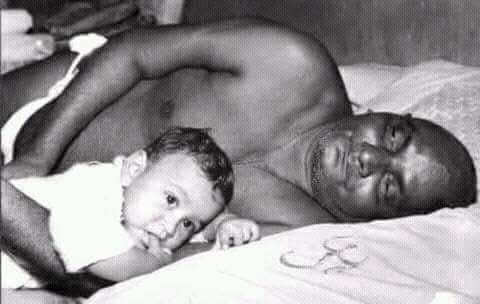

He is a true original. His love has reached out to people from across the globe. Their lives have been transformed by this presence even though he took samadhi in August 1961.
For the thousands of people who visit his shrine every month, Nityananda or Bade Baba as he is called in Ganeshpuri, he is a living presence. He may not be there in his physical form with his tall, angular body and his generous, tapering fingers but he makes sure that everyone who seeks his beatitude receives his grace.
The unemployed find jobs.
The sick become healthy.
The poor become rich.
The childless find their homes resounding with the laughter of children.
Who was this dark –hued saint and why is his charisma increasing by the year?
He has left behind no written records. No recorded speeches. He spoke little. Often an interaction with a devotee never went beyond `Ugh’ or `Humph’.
In his salad days, he was known to throw stones at pilgrims who would flock around him. The pilgrims would collect those stones because they knew anything he touched imbibed his grace.
One glance from him was sufficient to remove whatever obstacle had come their way in their lives. He left no official records and yet following his death, his devotees got together and put together a few books on his life.
The village of Ganeshpuri 70 kilometres north of Mumbai is Nityananda’s special domain. The local villagers describe it as his `kingdom’ and indeed everything in this village continues to revolve around him.
The very dust here, the villagers believe, is imbued with his presence.
Many years ago, when I travelled to Ganeshpuri for the first time in 1991, I was moved by his amazing presence that I penned a few words.
Ganeshpuri
A tree can hold the sky aloft
A single trunk sustains the weight of this village
Stars tumble through its green foliage
Shimmering like glow worms
Ganeshpuri is the home of the pure spirited
Home to a Siddhaguru
His spirit embraces its many textures
He is the centrifugal force
That holds its enterprises together.
Nityananda seldom spoke. When devotees questioned him about his parents or his place of birth, he had one cryptic reply that silenced everybody. “What is there to be told? Two crows came and two crows went.”
He used the allegory of the crow because an elderly woman who had gone into the forests of Quilandy to collect firewood found two crows cawing loudly close to a tall bush. She felt they were trying to tell her something. This was in the month of December at the end of the nineteenth century (1897-1900) in the South Kanara district of Quilandy in Kerala.
She went up to the bush to find a tiny male child swaddled in a white cloth. She scooped him up in her arms and carried him to the safety of her home. Hardly in a position to take care of another child, she decided to give the child to Uniamma, a childless woman who had often expressed her keenness to adopt a child. A small transaction ensued. The baby was handed over to Uniamma’s mother, in return she was rewarded with ten kilos of rice.
Enraptured with the baby, Uniamma decided to name him Rama. She worked as a cleaning woman in the local temples. She also made a little extra money working in the household of a lawyer by the name of Ishwar Iyer. The baby was carried to the workplace by the doting mother and Iyer soon developed a fondness for him. When the child was eighteen months old, he developed liver trouble and Iyer arranged for him to be treated by an ayurvedic doctor. The treatment did not help and the child grew thinner by the day.
A distraught Uniamma picked up the baby and went out of the house in search of help. She walked some distance when she encountered a tall dark-complexioned man with a satchel slung over his shoulders.
`Please help my sick child,’ she said.
The stranger did not seem surprised by her question. Rather, he immediately took out a packet from his satchel and handed it to her. His instructions were very specific. “Take some of this medicine, mix it with the flesh of a freshly killed crow, and fry it in ghee. Then give it to the child to eat but this must be done first thing in the morning on an empty stomach.’
At that very moment, a toddy tapper approached her carrying a dead crow in his right hand which he handed over to Uniamma. “I think you will need this,” he said.
Before Uniamma could even thank these two men, they had both disappeared.
A surprised Uniamma returned to her hut. The treatment worked and Rama began to get better. This unusual treatment had one side effect. Rama’s color changed. It seemed to grow darker and darker. Uniamma could not care less. She rejoiced because Rama had become well again.
Unfortunately, she died shortly afterwards and the responsibility of taking care of Rama fell on Ishwar Iyer’s shoulders.A deeply religious man, Iyer helped introduce the young boy to a host of scriptural texts. For someone so young, he was surprised to find that the boy possessed deep spiritual insights.
Some years later, Iyer decided to go on a pilgrimage and visit several religious centres. Knowing Rama’s religious bent of mind, he decided to take him along. When they reached Benaras, Rama informed him that he would go no further with him. Iyer tried to make Rama change his mind. The boy did not relent. He wanted to go and live in the Himalayas in order to spend his time in meditation and prayer.
“You promise you will return home at the earliest,” Iyer pleaded. “I will return at the appropriate time,” replied Rama refusing to pin himself down to any specific date.
Six years passed before Rama returned to Quilandy. An overjoyed Iyer greeted him with a great deal of affection as did all the members of his family. Iyer was taking his entire family to Guruvayur to perform the marriage ceremony of his youngest daughter and Rama was asked to come along.
Iyer became ill shortly after his daughter’s marriage. At the time of his death, he put his head on the young master’s lap and told him, “Before I die, I would like to have a vision of Surya Narayan, the divine being that dwells in the sun.’’
Rama showed him a vision of Surya Narayana being driven by his seven horses. The sight of the Sun God filled Iyer with a sense of fulfillment. “You have given me so much happiness. You are Nityananda ! May you be Nityananda to all!”
From that time Rama came to be called Nityananda.
Following Iyer’s death in 1905, Nityananda decided to visit the neighbouring countries of Ceylon, Malaysia and Burma and then from there he spent time travelling through the districts of Calicut, Tellicherry, Cannanore and Kanhangad. He travelled by steamer or by train and was never known to carry any money on his person. There are any number of legendary stories of his run ins with steamer and railway authorities especially since they suspected him of being both penniless and ticketless. And yet, each time he was questioned by the authorities, a ticket always materialized on his person.
In one such legendary run in with the authorities, Nityananda was travelling by train to Cannanore in south India when a ticket conductor asked him to show him his ticket. Those were the days of the British Raj and the ticket collector was not happy at the sight of this tall, dark vagrant dressed only in a langoti, who had settled himself in the compartment.
“Get down this very minute,” the ticket collector ordered. Young Nityananda got down from the compartment and went and sat down on the tracks. As he refused to move, the angry conductor told the engine driver to run him down. But to their shock, as also to the passengers, the train did not move.
The local station master took the ticket collector aside and whispered, “This man who you ordered out of the compartment is no ordinary fellow. He is a saint known to possess extraordinary powers. Please apologize to him and get him to board the train once again.”
Two hours had passed and a reluctant ticket collector, afraid he might lose his job, finally went up to Nityananda and apologized to him and in the same breath requested him to board the train. Within minutes of Nityananda being welcomed aboard, the engine burst into a loud whistle and the train began to move. No one knows why he travelled so extensively during his younger days. Details of his widespread travels were revealed by him in fleeting remarks that he made subsequently to those around him.
No one can understand the leela of a saint. Yet one fact is certain, where ever he went, he helped heal the sick and provide succor to the poor.
During his mid-twenties, an event occurred that made him famous. A farmer named Karunam was crossing the railway track when he fell down with an attack of epilepsy. His fellow farmers tried to revive him but failed to do so. Nityananda arrived at the spot, raised his hand in the air for some vibhuti, which materialized, and then placed a small amount of it in the sick man’s mouth. The farmer’s condition improved. The farmers who had gathered around Nityananda realized he possessed extraordinary powers.
Miracles occurred around him all the time. Late one morning he went to the Subrahmanyan temple in Palani and asked the priest to open the door of the temple so he could pray before the deity. “I’ve locked the shrine, so come and have darshan in the evening,” retorted the priest. While the priest made his way to his house, he began to hear the sound of the beating of the ceremonial drums and the ringing of the temple bells. He ran back to the shrine only to find aarti being performed to Lord Subramanyan by an invisible hand. The dumbfounded priest fell to the feet of Nityananda. A group of people who had gathered laid money at his feet. Nityananda asked them to make some rice porridge and serve it to a group of sannyasis who were visiting the temple.

As tales of his miracles spread, large crowds of people gathered around him. To escape them, he would not hesitate to scamper up a tree. The crowds refused to go away. Rather, they would wait for hours for him to come down in order to have his darshan. If he chanced to shake the branches of a tree, the people would pick up the leaves convinced that anything he touched would bring them luck.
Many of the methods he would resort to provide succor to people seemed peculiar to say the least. At one time, he went up to a pregnant woman and pinched both her nipples until they began to bleed. The woman screamed in pain. Shocked by his behaviour, some onlookers gathered around him and began to abuse him.
Nityananda merely said, “Three of her children have died at birth. This one will live.”
When the woman was questioned about the veracity of his strange diagnosis, the woman confirmed that indeed she had given birth to three children all three of whom had died soon after their birth. It turned out that each time she suckled them, her milk turned poisonous. When her fourth child was born, the baby survived and grew up to be a devotee of Nityananda.
Extraordinary incidents suffused his life. He was a part of this world and yet had no stake in it. In Mangalore, one evening some disciples were sitting around the young master n meditation when they saw a blinding flash of light behind Nityananda who continued to sit in the veera-padmasana with his eyes closed. He remained in that posture right through the night. Afraid he had taken samadhi, some devotees held a piece of cotton under his nose to check if he was breathing. No breath could be detected. Afraid they had lost him, a feeling of dejection came over them.
The following afternoon, Nityananda began to show some signs of movement and finally opened his eyes. He told the group who had continued to keep vigil on him through the night that while he thought he had gone for good, five divine personalities had surrounded him and insisted he must continue to live on earth. He never spoke about this incident again though those who were witness to it confirmed it had occurred.
One defining image of Nityananda as a young man was that he was constantly on the move. He moved like a man possessed barely touching the ground with his feet as he walked from one destination to another. No wonder people found him difficult to understand.
It was on one such occasion, that he reached a village on the banks of the Netravati river in Karnataka where a young boy by the name of Krishna lived with is parents. Krishna, later grew up to become one of his most famous disciples by the name Swami Muktananda. On one such occasion, the young Krishna found himself being embraced by Nityananda who then gazed into his eyes and then walked away. Nityananda’s embrace had a deep impact on the mind of young Krishna who decided that he wanted to take sannyas and become like him. Many years later, Swami Muktananda was to start living in Ganeshpuri where Nityananda gave him land to start his own ashram.
One of Nityananda’s earliest disciples was Hosdurga Devraj Pai, who worked as a headmaster in a local school in Kanhanghad. His daughter, Sunita was given the job of carrying a tiffin box, with four steel compartments inside the box each containing a food item, and handing it to him every morning. This was easier said than done because Nityananda never stayed in one place for long. Sunita often had to wait a long him for him to show up in order to hand over his tiffin box before she could make her way her way to school.
There were times when getting late for school, the young girl would leave the tiffin in the trunk of a tree and then collect it on her way back from school. Once the box got lost and Sunita’s family, already struggling to make ends meet, bought a new tiffin box with some difficulty. Nityananda never forgot the sacrifices she made on his behalf and many years later, handed Sunita a small steel box with four compartments similar to the earlier box which had been lost in the jungles of Kanhanghad.
This was around 1927. Nityananda was living in an old fort near Kanhangad where he busied himself with clearing the jungle growing inside the fort. His aim was to build a series of small caves near the fort to be used for meditation and prayer. There was no architect or engineer to help him in this formidable task which took over two years to complete. Labourers had to be hired for this job with the caves being hewn from large pieces of rock that covered the hillside. Some of the caves faced the east to allow the rays of the morning sun to light up the interiors while some caves were made west facing so that the last rays of the setting sun could illuminate them.


The local villagers would see Swami Nityananda working alongside the labourers. They wondered amongst themselves how a langoti-clad sadhu with no ostensible means of income could undertake such a large project. Some of the villagers decided to report the matter to the authorities pointing out how this sadhu had been seen putting his hand in his loincloth and taking out wades of notes to pay his workers. At other times, he would tell the labourers to go and look for the money under a certain rock in the forest from where the money invariably materialized.
The local police sub-inspector, suspicious that Nityananda was producing fake currency notes, took him to the police station and threatened him with dire consequences if he did not reveal his source of money. “Try rubbing my body vigorously,” Nityananda told the irate police inspector who when he actually rubbed his body to test these words saw bundles of notes falling around him.
The amazed police inspector informed the British District Collector E.M. Gawne and the Superintendent of Police about these happenings elaborating on how a sadhu was building a road and carving out caves on government property. Gawne decided to check the construction site in Kanhanghad for himself and went there along with a group of police officials. Nityananda took them around the caves as the work had been completed. Gawne asked him in English how he was raising the funds to pay the workers and why he was undertaking this work.
Nityananda replied in English, “Not for this one, ( implying himself) , if you want, you may have it.”
It is obvious that Gawne must have found this tall, dark man both unusual and mysterious. He must have also surmized that these caves were being built keeping some spiritual objective in mind because he did not pursue the matter further. Rather, he quietly took his leave of Nityananda and told the subordinates who had accompanied him on the site visit, not to disturb this enterprising lad in future.
When Gawne was leaving the place, he was surprised to find the road leading to the temple marked ‘Gawne Road’ in his honour. The road continues to be known by this name even today. Shortly after this incident, Gawne went on to be promoted as chief secretary to the government at the Madras Residency. Following his appointment as secretary, he gave written instructions to the authorities in Kanhangadh asking them to extend their support to Nityananda.
Nityananda’s growing popularity began to arouse the envy of some of the local people. A local magician Appayya Alva, known to use mantras and charms to attract people, was one of the people who became envious of his growing popularity. During the wedding of a devotee where both men had been invited, Alva became upset that Nityananda was made to sit on a specially decorated chair and was honoured with garlands that were placed around his neck. In a fit of rage, he threw a challenge at Nityananda asking him to chew a poisoned tobacco leaf. Nityananda ignored the challenge till Alva finally stuffed the leaf into his mouth. But the minute he did so, it was Alva who developed an acute pain in his stomach. He was taken to hospital where he died a few hours later.
Another local goon tried to knife him to death only to find that when he raised his arm to attack Nityananda, his own arm became paralyzed. None of these and many other attempts to harm him met with any success. In fact, those who tried to harm him ended up getting hurt. When he was much older, speaking about the death of Alva, Nityananda told some of his devotees, that Alva had long abused his powers and the divine force decided it was time for him to end his life.
There is another interesting story of Nityanada who on reaching the town of Bantval in the southern part of Karnataka was met with hostility by the local shopkeepers. They regarded this langoti-clad individual as a lunatic and began throwing mud dirty water at him apart from calling him names. He responded to their taunting by stating, “The Ganga river will come here and wash your sins away.” (When he used the word Ganga he was referring to the Netravati river which flowed in the Bentwal region)
He had scarcely uttered these words of warning when dark clouds covered the sky and it began to rain heavily. The river Netravati started overflowing and soon, the entire city was flooded with shops and homes being destroyed by the flood waters. Some village elders told the shopkeepers, “You invited this disaster on yourself by troubling a saint. Go and beg his forgiveness. Only he can save you.”
The shopkeepers rushed to find Nityananda who was sitting on top of a tree. “Bhagwan, forgive us!” they cried.
Nityananda told them to go and prostrate themselves before the Netravati river instead. “Propitiate her with holy kumkum and beseech her to pardon you.”
The men did as they told and soon the river retreated to her earlier size.
After leaving Kanhanghad, Nityananda spent some time in Bombay living at the salt mines in Kurla. A devotee, Raghunath Shenoy brought freshly cooked dinner for him every evening. Nityananda used to carry a large torch and would wave the light to Raghunath to show him where he was sitting. Raghunath would open the packet of food and place if before Nityananda. At that time, Nityananda still ate what was brought for him by his devotees. But later, he ate only what was fed to him by his devotees.
During his period in Mumbai, he also spent a great deal of time with his devotee Mrs. Muktabai Rao who lived in Gamdevi. She was not keeping good health. Nityananda treated her like his mother and would arrive at her house early morning and insist on doing all the household chores. Muktabai and her husband protested but Nityananda paid no heed to them. Since Muktabai’s health was getting worse, the doctor advised her to move to a different city and so her husband decided to send her to Nasik. As her husband did not get leave from his office, Nityananda decided to accompany her to Nasik.
Muktabai and Nityananda reached Nasik station at midnight when she realized she had forgotten to bring the address of the place where they were expected to stay. Nityananda felt it was better for them to spend the night at the station itself but Muktabai felt they should try and reach their destination at the earliest.
Nityananda hired a tonga giving the tonga driver an approximate idea of where they had to go. Muktabai was wearing a great deal of gold jewellery. The tonga driver decided he could rob her and drove them to a dark and lonely area. Nityananda decided to show him one of his frightening forms and the terrified tonga driver swiftly brought both of them back to the station. Muktabai slept in the waiting room while Nityananda kept guard outside. The next day Muktabai’s husband sent her the correct address and they moved to the bungalow where she spent her time resting before returning to her home in Gamdevi.
Some days later, Nityananda was sitting in meditation when he got up abruptly and told a devotee sitting by his side, “Everything belonging to Muktabai has gone! ….. But it matters not. Let it go. Even if all is lost, more than what has gone will return.” He spoke these words in Konkani in which he was fluent.
A few days later, Nityananda decided to return to Kanhangad. Meanwhile, as had been predicted by Nityananda, Muktabai’s husband suffered a major loss in his jewellery business and was forced to mortgage his entire property to pay off a bank loan. The amount raised in the mortgage was not enough to pay the bank loan and his entire property was taken over by the bank. Muktabai decided to seek Nityananda’s help by visiting him at the Kanhangad ashram.
“So, everything is lost is it?” Was the first question a concerned Nityananda asked her as she entered the ashram.
Muktabai was stoic in her reply. “What is there of mine that I have lost? Since I have met you I have surrendered everything of mine to you,” she said.
Baba smiled. “What has gone, let it go. Nobody has robbed you of your children’s future, isn’t that so? Nobody has taken away the intellect and wisdom of your husband, isn’t that so? Then where is the cause of worry? More than what is lost, you will get back,” he said.
A reassured Muktabai smiled at these words. She knew this difficult period would pass and made her way back to Mumbai.
Shortly after this incident, Nityananda returned to Mumbai but chose this time to stay in Borivali and in the Kanheri caves for six months. From there he moved to the village of Akroli and then on to the village of Vajreshwari whose most prominent feature was the Vajreshwari temple built by Chimanaji Appe, brother of the Peshwa ruler Baji Rao 2 after he defeated the Portugese army in 1742.

The temple is located on the Mandagiri hillock and is visible from every part of the Tansa valley through which the river Tansa flows. In the temple, the image of Goddess Vajreshwari is flanked on her right by Mahalakshi and Renuka, and to her left by Kalika, the goddess who devours time.
Nityananda is said to have helped revive the Vajreshwari shrine which had become inactive. When Nityananda arrived in the village, the local villagers asked him to come and bless the temple. As he climbed up the steep steps that led up to the temple, he stopped at the lion which stood guard outside the temple and patted his head three times and said, “All right now, wake up! Wake up! Wake up!” From that day onwards the temple became active and daily worship continues to be held there every day.
In Vajreshwari, he also helped reconstruct an old Nath temple. He also helped get a school, a dharmshala and a medical dispensary built near the Vajreshwari shrine. It was in 1937 that he took the unprecedented step of taking the rough beaten path that led up to the village of Ganeshpuri.


Ganeshpuri situated in the Tansa valley was a thickly forested region with the Mandakini mountains looming on its northern horizon while the Tansa river flowed close to the old Bhimeshwar temple dedicated to Lord Shiva. The Shivalingam within the temple is known as Bhimeshwar Mahadev. Although the present lingam is said to be around 800 years old, legend has it that the original structure was built by Bhima, one of the five Pandava brothers. Over the centuries many saints are said to come and done tapas at this shrine and mention has been made of this village in the Ramayana as being the place where Rama and Sita had stopped during their period of exile from Ayodhya.
Gangaubai Bhopi and her husband Niranjan Pujari used to take care of the Bhimeshwar temple and owned the land around it. Early one morning, Gangubai saw a tall, bearded man walking with great speed towards the Bhimeshwar shrine. He bowed before the Shiv lingam and then went and had a bath in the kunda of the hot spring situated right in front of the temple. Then he asked Gangubai whether arrangements could be made for him to stay there. Gangubai mistook him for a Muslim and informed him that he was not allowed to stay here.
It was only later in the afternoon, when a devotee who had come from Vajreshwari in search of Nityananda who informed Gangubai that Nityananda was a great master.
The poor tribal woman apologised and immediately began making arrangements for his stay. ` You are welcome to stay in the hut next to ours,’ she told him.
She soon realized she was dealing with a great being. Not only did he possess extraordinary powers but he was also a deeply compassionate person. The following day after his arrival, she informed him, “The land around the temple belongs to us. Please feel free to build a hut wherever you like.” Nityananda smiled at her suggestion and got down to the task of constructing a hut with his own hands.
Next, he borrowed an earthen pot from Gangubai to make lentil and rice khichdi. The fireplace on which the cooking was done comprised of three stones placed in a rectangular fashion. Dry twigs were used to light the fire. This khichdi was distributed as prasad to some devotees who had arrived from Bombay to meet him.
Nityananda soon got down to a job at which he had already shown great proficiency which was to reconstruct and remodel the entire area around the Bhimeshwar temple. Bhimeshwar temple had a water tank built around a warm underground spring that contained medicinal water and where pilgrims used to bathe before they prayed at the temple. One of Nityananda’s first tasks was to build one more kunda (tank). He did so by ensuring that the water from one tank flowed into the other. He further insisted that devotees must take a dip in these kundas before praying at the Bhimeshwar shrine.
Next, he got down to constructing a three-room ashram next to the Bimeshwar temple and gave it the name of Vaikuntha.


A Krishna temple was built behind the ashram where there was a statue of Nandi bull. A part of the bull’s body was used to form the body of the cow who stands behind the flute-playing Krishna. Nityananda got a cement platform built outside these rooms where he began to meet his devotees. One room in Vaikuntha was used by him as his living space while Gangubai and her husband Niranjan Pujari used the adjacent room.
Gangubai’s daughter Barkhu, a name kept by Nityananda and which means small, continues to live in a traditional hut with a sloping red tile roof adjacent to the Bhimeshwar temple. She has many precious memories of her childhood years spent with Nityananda who was lovingly addressed as Baba by all the villagers.
Barkhu remembers these childhood years with a sense of nostalgia and how Baba guided her at every step.
Barkhu says, “My mother Gangubai and father Niranjan Pujari worked day and night to take care of Baba. The Bhimeshwar temple belongs to our family and we have been its caretakers for generations. When Baba arrived here in 1937, my mother soon recognized that he was an adbhut saint. She gave him land where he constructed three rooms that came to be called the Vaikunth ashram. He stayed there for several years before moving to Kailash Niwas,’ said Barkhu.
She is seated on a grey plastic chair in the courtyard in front of her house. It is obvious she has a large family all of whom continue to live together. They enjoy a special status in the village and her son has recently been elected as a sarpanch (2017). Pointing to a door located in a building that presently houses the main Bhimeshwar Nityananda Trust, she said, “I still remember how every morning, sometimes as early as two o’clock in the morning, Baba used to open the door of his room and walk to the kunda to bathe in its medicinal waters. The kunda is part of the Bhimeshwar temple and has been so for thousands of year from the time of the Pandavas,” she believes. Given the large numbers of pilgrims that continue to bathe in these waters, it is obvious that bathing in these kundas is an important ritual for the devotees who come to this shrine.
Barkhu recalls how Baba formed an integral part of her childhood. ` Ever since I can remember, Baba was there for us, like a revered family figure. My earliest memories are all woven around him. In my mind’s eye, I can see him even now opening the door of his hut walking rapidly like an athelete towards the kunda. After taking a dip, he would walk back to his room. The most surprising aspect of his bathing was that even after he came out of the water, his langoti was never wet. He possessed such amazing powers.’
Barkhu, now a grandmother herself, further recalls, “Baba loved children and there were a group of us kids who were allowed to spend time with him. He lived in one room, my parents were in the adjacent room while eight to ten of us village children were given the third room to live in. When he came here, he spoke only Konkani. It was we kids who taught him to speak Marathi though he never learnt to speak Marathi fluently,’ Barkhu said.
Pointing to a small shed located to one side of her house she said, “That is the power station that used to generate electricity for his room. There was no electricity in Ganeshpuri in those days but this power station generated enough electricity for one bulb to light up his room.” Barkhu then adds, “At the time of Baba’s death, different viewpoints were being expressed about where to bury him. The village panchayat did not want Baba buried in the old Vaikunth ashram. But my mother told them that she had no problem in donating our family land to build his samadhi shrine. Our family served him with great devotion as we did serve both the Shaligram Swami and Govind Swami. The panchayat then agreed to our offer and his samadhi shrine was built on the very place where he had lived for many years.”
Some of Barkhu’s childhood friends also spent their time with Baba.
Both Shashikala and Induvati, grandmothers like Barkhu, were part of the children’s `gang’ that was allowed to stay in Vaikunth. They too cherish memories of the special time they spent with him.

Several photographs taken by the popular Mumbai-based photographer Suvarna show Baba bestowing his blessings on toddlers or else walking through the fields around Ganeshpuri with groups of children.
Shashikala is very forthcoming. ”Baba used to wake us children up at 4 o’clock sharp in the morning and tell us to go and take a bath in the kunda. We did as were told. He then called our parents and told them that they had to educate us by sending us to school. I was sent off to study in a school in Vajreshwari while other children were admitted to a make-shift school that had been started in Ganeshpuri. When he arrived here, Ganeshpuri was a tiny hamlet with a few families. There were no shops, no connecting roads- mainly thick forest land. But his presence was like a magnet. Once people came to know of his presence, they started making a beeline for this place. They would offer him food, money, clothes, flowers….. a wide assortment of items. He never touched money with his own hands. He would tell us kids to pick up the money given to him as offering and put it in a hundi kept in his room. That money was collected to feed the poor or used for some constructive purpose. In all the years that we lived with him in Vaikuntha, we never saw him touch money even once,’ she said.
“Food given as offering would be distributed amongst the villagers. Some devotees brought large bales of cloth. Baba would send for a tailor from Vajreshwari who would make dresses for the girls and shirts and knickers for the boys. From the start we realized he was different from other sadhus. He possessed special powers. One day, we saw him kill a fly with his hand. He then passed his hand over the dead fly, uttered a mantra, and the fly flew away. We were fascinated by this, and we later heard stories of how he had brought some people back to life. Such were his powers. We were all in awe of him,” said Shashikala.
“Baba insisted that children, whether boys or girls, be provided with an education. Some of us went to study in a school in Vajreshwari while others were admitted to a make-shift school that had been started in Ganeshpuri. I was sent to study in a school in Vajreshwari, and when I used to return from school in the late afternoon, he would teasingly press my stomach with his hands and say, `You must be feeling very hungry ! Go and eat your lunch!’ I remember with a sense of nostalgia the mithai and dry fruits that we were given to eat. It was all given to him by his devotees. Today, eating mithai and dry fruit has become such a rarity. When I remember those days, I have tears in my eyes,” she adds.
The present Ganeshpuri, with its large conglomeration of shops, hotels, dharamsalas and other places of pilgrimage, owes its existence to him. During the period that Baba lived there, it was little more than a tiny hamlet surrounded by forests. Today it has become a major pilgrimage centre attracting pilgrims from around the globe. All the key buildings, whether it be Nityananda’s shrine or the Kailash Niwas were all constructed at his initiative.
Barkhu, Induvati and Shashikala recall how their parents had implicit faith in him. When Baba suggested to Induvati and Shashikala’s fathers that they live in Ganeshpuri, they relocated without batting an eyelid. The question of contradicting his directions did not arise.
Recalls Shashikala, “My father, a retired military man, used to run a hotel in Satara. Someone told him about Baba, and he came for his darshan. Baba told him to sell his hotel and move here. He did so without blinking an eyelid. That was the kind of faith Baba evoked. We all worshipped him.”
Induvati had a similar story about her father’s decision to move from Mumbai to Ganeshpuri. “The first time my father came to meet him, Baba threw stones at him. But on his second visit, Baba told my father to sell his shop in Mumbai and settle in Ganeshpuri. My father agreed, and all of us moved to this village. Now that I am a widow with no husband to support me, I sometimes wonder if my father made a wise decision. Given the way property prices have escalated, a shop in Mumbai would be worth a great deal of money. But I have no regrets. Baba knew best for all of us,” Induvati said.
Presently, Induvati is living alone in her home in Ganeshpuri, and her eight children visit her sporadically. She said, “There is no doubt that Baba took a special interest in us children. Occasionally he gave an oil massage to some of us, and then took us to the Tansa river for a bath. It was at his initiative that a school was constructed for the children of Ganeshpuri. Once the building was completed, he handed it over to the district collector to run. To overcome the problem of chronic water shortage, he got a well dug near the ashram. The Krishna temple constructed behind the Bhimsehwar shrine got constructed because of him.’ As the numbers of devotees coming to Ganeshpuri increased, he had a dharamsala built in front of the Vaikunth ashram.


There is an interesting story of how the goddess Bhadrakali had been pleading with Baba that she wanted to join him in Ganeshpuri. He allowed her to come but warned her she would not be allowed to eat meat in the village. He built a temple for her where puja continues to be done to this day. I was so moved by hearing this story that I wrote a poem around it.
It reads as follows-
A Home for Bhadrakali
Every goddess needs a house
Made out of stone and mortar
Built under the shade of a peepul tree
With large windows
To allow the sun to float through
Bhadrakali is no exception
She needs to live next to Bade Baba
Next to a saint who has lived
Under the canopy of the wide Ganeshpuri sky,
Swum the turbulent waters of the Tansa river in a storm,
To rescue the weak and helpless,
Bhadrakali knew Bade Baba would provide her with a resting place
A special home
A home which is her temple
A home which is her place of worship
A home which is her place of pilgrimage
A home from which she can gaze into
The wide shoulders of the Mandakini mountains.
Bhadrakali knows all this
She knows Bade Baba has put his strength behind her
She knows he is standing by her side
Following her into the avenues of the long night.

As his fame grew, the numbers of pilgrims kept increasing. People from all walks of life including politicians, artists, musicians, doctors and heads of religious institutions began flocking to Ganeshpuri. They were willing to wait hours in ever lengthening queues to have one sight of him.

His style of dispensing blessings continued to border on the eccentric. Lying inside his room, or sitting outside Vaikunth, all Baba did was nod his head or make a grunting noise to indicate he had heard the plea. No words were exchanged, but the devotee returned home satisfied.
One day Baba was sitting in Vaikuntha when a sannyasi came up to him. Baba took one look at him, picked up a stick and hit the sannyasi hard on his leg. The sannyasi did not cringe. He bowed before him and left. A devotee who had witnessed this asked Baba later why he had hit him on his leg.
Baba who referred to himself as `this one’ replied, `The sannyasi has made considerable progress in his spiritual journey, but was being blocked due to sensual thoughts. This one struck him on a nerve centre in the joint of the leg because this controls sensual desire,” said Baba.
Another devotee who was struck on the head with a stick was Shri Khanolkar who wanted to be initiated on the spiritual path by Baba. Baba told him that this was not the opportune time to take such a step, but Khanolkar was a stubborn man and vowed to undertake a fast till Baba agreed. When Baba heard this, he hit Khanolkar on his head. “First, get your niece who is dependent on you married. Then get married yourself. Only after this will you progress on the path of love and devotion,” he was ordered. Khanolkar had no choice but to follow Baba’s instructions.
Each interaction with Baba was unique in its own way A devotee by the name of Sitaram Shenoy recalled how there was a time when both his wife and mother refused to live under one roof, and the mother left their Mumbai home to return to her native town of Padbidri in south Karnataka. It had been Sitaram’s desire to build a house close to where Nityananda lived in Vajreshwari in the 1930s. Nityananda recommended he build a place within the Vajreshwari temple complex. But by the time Sitaram got possession of the land, Nityananda had moved to Ganeshpuri, so when Sitaram went to invite him for the Bhumipuja ceremony, the saint replied that it would be more appropriate to invite his mother for the ceremony. Sitaram refused to listen and informed him that he was his God, his Mother, his Guru, in fact his everything. Nityananda countered by saying, “Only your mother should be given this honor.”
To this Sitaram replied that if he did not come, he would start the work by keeping of a photograph of his at his at the construction site.
Next day, work started on the site, and a wall was constructed. The following morning, there was a great deal of commotion as the wall that had been constructed had collapsed. Refusing to be put off by this setback, Sitaram restarted work on the wall but once again the next morning the wall collapsed. This happened on three consecutive occasions. Finally, it dawned on Sitaram that Nityananda was behind this. He went to Ganeshpuri, and begged forgiveness of the master. Nityananda laughed and told him that for the Graha pravesh, he must invite his mother, wash her feet with water, offer her a new sari and with her blessings, start his life in his new house.
Some time in 1940, when Shenoy had suffered a major heart attack, he was admitted to a nursing home in Vajreshwari but he insisted he be taken to Ganeshpuri. The doctors were aghast at this request. They relented when his brother told them that they should discharge Shenoy at his own risk. Sitaram was brought on a stretcher to Baba who was sitting next to the Bhimsehwar temple drinking coffee. Baba ordered Sitaram to get up, which he was unable to do. When his relatives tried to help, Nityananda admonished them and told them that he must do so on his own. Sitaram tried yet again but failed to get up. Finally, Baba poked him hard. Not only did he get up, but he fell at Baba’s feet. Baba told him to take a walk around the hot springs, and then come back to him. He did so to the surprise of everyone present. He was then given a cup of coffee to drink, and also a walking stick.
Ten years later, Sitaram again fell sick. He sent his brother to meet Baba and convey the news of his sickness. The brother returned with Nityananda’s message that the time had come for him to watch where his soul was going, indicating his end was near. He died soon afterwards. His wife Sushila could not accept the reality of his death. She insisted on having his body be put into a car, and had him driven to Ganeshpuri.
After a series of mishaps, Sushila arrived at the ashram only to be told by Baba to go back to perform the last rites of her husband. “If that is not done, no dead body will go to Chandanwadi (a well known cremation ground in Mumbai).’’
Stories of his interactions have an apocryphal tone to them. One such incident took place when Baba told a devotee to take out all the cash from the charity box placed outside the Krishna temple, leaving a little behind. The devotee was taken aback at this unusual request. The next morning he understood why he had received these strange instructions. A poor, starving villager had broken into the cash box, and Baba had left a little money in it to ensure he could buy some food.
In 1947, the Bangalore-based business man, Laxmansa Khode, who had suffered heavy losses in his business, was brought before Baba by his friend Ramkrishna Shetty. Nityananda blessed Khode, and advised him on what steps to take to improve his business. He followed Baba’s advice, but was next slapped with a legal case by the income tax authorities. He rushed back to Ganeshpuri to seek advice on what to do next. Once again he was informed by Baba that he must submit a petition before the tax authorities which would see him paying a fine of around one lakh rupees. This would help him get free of his tax wrangles.

As foretold by Baba, this is exactly what happened. To express his gratitude, he built a large building for Baba that came to be known as `Bangalore Building.’ After its completion, he kept pleading with Nityananda to move there. At that time, Baba was living in Kailas Niwas which had been inaugurated in 1956 as the Vaikunth ashram was proving too small to cope with the growing numbers of pilgrims. The Kailash Niwas had a large hall where he could receive visitors.
Kailash Niwas had helped ensure a more regulated and monitored schedule for Baba. With larger and larger multitudes of people visiting him, those taking care of him began to regulate the time given for darshan.
It was apparent to everyone that Nityananda, was growing older and during the 1940s he had also put on weight. This seemed strange because he had long stopped eating food by himself, and ate only what his devotees fed him.
Some devotees would ask him why his feet were swollen to which he replied, “All people come here for seva. They also deposit their desires and difficulties at the feet, and while the ocean of divine mercy washes away much of the effect, a little has to be accepted by the body, which has been assumed only for the sake of the devotees.”
At the insistence of his devotees, his teeth which had been giving him trouble, were extracted. This was done with considerable pain and bleeding. It left him weak, and it took a long time for his gums to heal. He refused to wear a false set of teeth, and so his food intake became even less.
When Muktabai Rao came to him and asked him why his waistline had become so large, he replied that the love and devotion of all his devotees had come and settled in that area. To others he said breath retention had resulted in an increase in his girth.
What was becoming clear to everyone was that his health was deteriorating. When Khoday heard that Baba was not feeling well, he arrived in Ganeshpuri and told Baba he was willing to charter a plane and take him to Bangalore for treatment.
Nityanand declined to leave citing that the `assembly of sages’ had said that `it be here only.’ No one understood the implication of these words though in retrospect it became clear that he was referring to his impending death.
Then suddenly on the afternoon of July 25 1961 Nityananda asked to be moved to the Bangalorewalla building.


It was only after he took samadhi that devotees understood why he had asked to be moved to a more spacious building. For one, it was the only building in Ganeshpuri that allowed for large numbers of devotees to enter and leave.
In June that year he had insisted the reconstruction of the old Vaikunth ashram be completed. Those around him wanted the slab to be put on the roof after the monsoon. Baba insisted the slab be put on the roof immediately, and so the roof went up before the monsoon. It was here that his earthly remains were interred following his death.
Some devotees did not misread the signs of his departure. A woman devotee from Dadar who was called Mataji came to visit him in Ganeshpuri. When she heard that the master was having a discharge in his ears, she started crying.
She went to meet Baba to clarify if her apprehensions were correct.
“Why are you crying? Don’t cry! More work is possible in the subtle than in the gross,” Baba informed her.
On July 27 1961, the day of Guru Purnima, he addressed a large gathering of devotees for nearly 45 minutes. It was during this talk that he referred once again to the time he sat on trains and boxcars. He compared life to being an uphill task where people would climb the spiritual ladder only to keep slipping. That is why it was important for the boxcars to be kept on the rails, and this would happen only if there was faith and conviction.
A day or two later, the Master was standing on the balcony of the building with devotee Madhuamma within hearing distance. The master was heard saying, “If anyone wants to see the sun, let him be seen now. Tomorrow he may not be seen.”
He now stopped moving around and stayed in the main hall. Around 4pm on the day before the mahasamadhi, Baba asked for B.H. Mehta. When he arrived, he was handed a large parcel wrapped up in a piece of cloth to be taken to Kanhanghad. No one was present to listen to what conspired between them, but it was Mehta who subsequently raised money to construct two temples in Kanhanghad. One was located above the rock-cut caves, and the other at Guruvana. Engineer Hedge (as he was called by the people of Ganeshpuri and by Baba), had an urge to go to Ganeshpuri on the evening of August 7. Hedge a long time devotee was horrified to find Baba so sick. He began massaging his feet around midnight and continued doing so till 4 am. During this period Baba told him that he regretted that devotees flocked here only to ask for money.
“When earlier prayers are granted in the hope that contentment would follow and that they would seek higher values, another demand is placed in a never-ending series of wants and desires. Not much point in allowing the body to continue -hence the samadhi tomorrow,” Baba told him. Hedge was shocked at Baba’s words. He pleaded with Baba to postpone his samadhi.
“It is possible only if a few devotees imbued with nishkama bhakti are there. Is there a bhakta Pundalika around? Even one such is enough, and the samadhi will be cancelled. When such a devotee is present, even God cannot take leave without his permission, or to be able to disengage himself from the bond of his pure love.” Baba then asked Hedge, ` Have you got nishkama bhakti?’

Hedge confessed that was not the case with him. Around 4 am, Baba asked Hedge to go and bathe in the kundas. Some devotees gathered around him at 6 am, including Chandu, a companion from his days in Kanhanghad. The master asked him if he had brought kasthuri. Chandu burst into tears when he heard this, for years ago in Kanhanghad, the Master had told him that when he asked for kasthuri, it would be the time for his departure.
To mollify him, Baba asked him whether he would take him to Kanhangad and whether they could travel there by train to which Chandu replied that trains had started running in that area now. To this Baba asked how he could reach that town given the fact that his body had become frail.
Early morning, another devotee, C.C. Parekh, was leaving for Bombay. He decided to take the Master’s darshan before his departure. He was shocked to find that the Baba was having problem with breathing. He gave him some oxygen which helped improve his breathing. Realizing how precarious his health was, Parekh gave up the idea of leaving for Bombay. He stood by Baba’s bed and was soon joined by Dr Nicholson and his wife.
Dr Nicholson gave him some medicines, but Baba declined to take them. Baba then insisted the oxygen mask be removed. He then wanted a little drinking water. Parekh offered him some, and he took a few sips.
At around 8.45am, he asked Lakshmansa Khoday for a little fresh lemon juice. Khoday gave him some tender coconut water which he drank. Around 9.30 am, Gopalmama noticed that the Master’s body was very hot. When he conveyed this to him, the Master replied, “It will be like that only.”
Then he repeated the words that he used to repeat to himself, “Sadhu became Swami; Swami became Deva to some; Baba and Bhagwan to others; Deva will now enter samadhi, sthira Samadhi.” These were his last audible words. According to Parekh, he took two to three deep breadths between 10.40 and 10.45am. His last breadth saw him straighten his legs, and join his hands above his navel, after which he moved no more. The Master had left his body.
Following his death, the question before his devotees was where should Baba’s body be buried. While some devotees suggested it be in the Banglorewallah building, others suggested the samadhi be constructed on a hilltop. Ultimately, it was decided to bury him in Vaikunth itself. Baba had often mentioned that all the sages were there around the old ashram. It was on August 10 that Baba was interred. His body was seated in a lotus position, placed on an easy chair, and then lowered into the ground. Everyone was shocked by Baba’s sudden departure. Barkhu, Induvati, Shashikala and their friends were so upset that they wept for months.
Said Shashikala, “When there was a strong rumour that Baba was going to take the chartered flight and leave for Bangalore, all three of us secretly plotted to take the train and go to Bangalore to be with him. For us, there was no life without him. I had gold earrings and a necklace, and I had decided I would sell this stuff to pay for our train tickets to Bangalore. For as long as he lived, we would go and take his darshan every day. He was an intrinsic part of our lives. Without him, we felt lost.”
Induvati agreed. “It was a very difficult time for all of us. For us, he was like a tall banyan tree who covered us all in his shade. And then suddenly to find that he was no longer with us was agony.”
Said Barkhu, “It took many, many months for my parents to come to terms with him no longer being amongst our midst. I have never grieved as much for the loss of my parents as I did for Baba. Of course, once his temple came up and his murti was installed there, it felt very reassuring. It was as though he was amongst us once more. But nothing in this world can compare with having a living saint amongst us in our village.”


The Samadhi shrine of Nityananda has now emerged as one of the key pilgrimage sites of India. Hundred of devotees gather here on Guru Poornima and on his death anniversary. His murti sitting in an upright position with one arm over his leg is striking. His hands with their long, tapering fingers remain the most remarkable aspect of his being, and the sculptor has been able to capture his strength, generosity and graciousness which were the hall marks of his personality.
In Ganeshpuri and everywhere else, he is the reigning deity of our lives. During the nineties, Baba’s temple and its surroundings had a simpler ambience. I remember going there in the mid-nineties and writing this poem about it.
…………………….
Bade Baba
Bade Baba’s home smells of incense and dung
Dogs with curled tails snap at curious strangers
Beggars keep watch outside his temple
Keep guard while a troop of children scatter
Like sparrows across the empty courtyard
Tribal women sit at his doorsteps selling guavas
Their long shadows resting at his feet
A figure of solitary splendour
Keeping vigil to the unfolding of the light.
……………………..
Baba had his own way of telling his disciples he was there for them. I learnt this in a rather peculiar manner. In 1991, when I was working for The Independent, I was invited to write an article on how the state of Goa had become the first state to achieve one hundred per cent literacy in India. On my first night there, I was made to stay in a government guest house located on an island off the coast of Ratnagiri in Maharashtra. It was the full moon night of Guru Purnima and I had no one around to disturb me. The shimmering water with the moonlight dancing on it was a sight of extraordinary beauty. I thanked Baba for allowing me to spend an evening in such spectacular surroundings.
I spent the next three days talking to different villagers who had managed to break the barrier of illiteracy and could read and write with a fair amount of fluency. On my fourth morning, as we was to make my way back to Panjim airport, we stopped at a wayside hut to drink a cup of coffee. Inside the hut hung a large picture of Nityananda. I went and bowed before it, and told the organizers who had taken care of my itinerary, “It is my good fortune to start my day after receiving Baba’s blessings.’’
A white Maruti van drove me to the Panjim airport. Mid-way, there was a head-on collision between a crowded tempo carrying cauliflower and our van. The Maruti vans are notoriously light weight, and logic would have it that the van on which I was sitting would have been smashed to smithereens by the weight of the collision but it was the much larger-sized tempo which surprisingly rolled over into a ditch. Fortunately no one in our van was hurt. I thanked Baba. “That is the way Baba looks after his devotees,” I told myself.
And so he has continued to do at every step of my life. During the mid-nineties, when I was freelancing, I remember one evening walking towards his temple in Ganeshpuri village, and admonishing him ,“This will not do Bade Baba. This will not do. I cannot survive as a freelancer. You have to find a job for me.” And he did.
One year later, I was given the opportunity of writing a weekly column for The Asian Age, a daily newspaper published from several cities including London. The column subsequently metamorphosed into a full time job.
In 2010, I was travelling to Dehra Dun when I suffered a fit. My right eye began twitching and I lost the use of my right arm. I was rushed to a nearby nursing home located in the city of Panipat. The doctors there helped me stabilize and from there I was taken to a hospital in New Delhi to be put under treatment by a team of experts. It turned out that a worm had entered my brain.
The loss of right arm frightened me for I was afraid I would lose my job. I prayed desperately to Swami Nityananda and would spend all my time writing his name in notebook after notebook. It was during these difficult days that I wrote these lines:
Affirmations
My mind has a somersault
Black is white, white has turned a sultry blue
The trees growing outside Baba’s temple
Have lost their hue
Is my mind confused
Or has the world turned turtle
Who is to say?
The sparrows continue their empty chatter
The loudest participants
In Baba’s quiet affirmations.
Baba your love for me
Cannot exceed my love for you
I met you much before
You cast your eye on me
I keep following you about
And will continue to do so
You will need to make a greater effort
To understand what it means
To lead a life of grief.
Three months later, I was back at work. Bade Baba had saved my life and I could once again return to my old routine.
In 2013, I had gone to Durban in South Africa to cover the UNFCCC 13 conference on environment. On one Sunday, a group of journalists including myself had gone to spend the day at the beach. I remember being fascinated by the way the waters of the Indian Ocean kept changing its colours from an iridescent blue to a tinted greenish blue akin to the colors of a peacock unlike the dull grey waters of the Arabian Sea that one gets to see when one visits Mumbai. The reason why I am referring to these waters is because in 2014, Baba appeared in a dream in which he was standing tall amidst the deep waters of the Indian Ocean.
When I saw him in those waters, I knew immediately it was not the Arabian Sea. It seemed as though the waters belonged to the Indian Ocean, the same waters I had seen when I was standing at the sea shore in Durban.
Baba was pointing to a shadowy figure of a man who belonged to these waters. Who was this man he was pointing to? I did not understand.
It took me a long time to understand the significance of this dream. The person he had alluding to was Banudutt Boolakuy, known to everyone as Mr Datta, who was presently living in Ganeshpuri but belonged to Mauritius. The man used to dress in a white kurta – pjyama and lived the life of a sannyasi.
I was mulling over this mysterious dream all the more extraordinary because it was the only time that Swami Nityananda had graced me in this fashion.
I was driving to the Asian Age office and was wondering to myself how strange it was for Baba who belonged to an arid part of Maharashtra to be standing on a huge pool of water pointing towards a shadowy figure whom I chanced to have met at a guest house being run by a lady in Ganeshpuri.
I told Baba, “He’s so poor.’
Just then a truck came and hit my Maruti Swift car on the right side. Before I could stop and take his number down, the truck had moved on. In a state of shock, I told myself “You can’t argue with Baba. If he gives you a directive, you have to obey it.”
A French tax consultant, Louis Tari recalls how, during his stay in Mysore, Nityananda appeared in a dream. “He was wearing a long white kurta and pyjama. Nityananda in my dream appeared to be in his mid-thirties, and looked very strong and agile. He gripped me by my arm and made me lie down and do a pranam before the murti of Chamunda Devi. I then remembered that when I was staying in Mysore, I had gone to the temple of Chamunda Devi and bowed before her murti but I had never done a dand namaskar. This time, Bade Baba made me prostrate before her. After I had prostrated before her, he also prostrated before her. He was trying to convey to me just how powerful this Devi goddess is and how charged she is with energy,” said Louis Tari describing how Nityananda continues to make his presence felt before his devotees.
Swami Nityananda’s had his own unique manner of bestowing grace. He asked for nothing from his devotees but to have faith in the grace of God. His vibrations can be felt very strongly in his temple in Ganeshpuri. He is the burning torch who has lighted up the lives of thousands of people who have had the good fortune to be touched by his amazing grace.
Two years ago when I was visiting Ganeshpuri, I wrote these lines on him.
Swami Nityananda of Ganeshpuri
May I always be there to open the door for you
To welcome you
As you sit down on your chair
May I be there
To offer you a glass of water
To take your thirst away,
Switch on the fan for you
Spread a clean bedsheet
To help you lie down on your cement bed,
May I be there to greet you
As you step outside to catch
The first rays of Surya Narayan, the morning sun…….
I have no one to talk to, no one at all,
I talk to my shirt slipping it over my shoulders.
I talk to my trousers, pulling them over the length of my legs,
Tucking my shirt into my trousers.
I stare at my blue tie in astonishment,
It is the colour of the sky.
I anchor my feet into my black leather shoes
To take a few steps to the bus stop,
Carrying a briefcase under my arm I tell myself
Oh Nityananda! Embrace my soul!
Teach it to be comfortable in this tiny enclosure
So I can spend my remaining days
Indulging in small talk with you.
About the Author

Rashme Sehgal started her career in the 1970s as a poet and short story writer. She moved to journalism and went on to work for several leading newspapers including The Independent, The Telegraph, The Times of India and The Asian Age where she worked as environment editor. Some of the landmark events she has covered during her journalistic career have been the exodus of the Kashmiri Pandits from the Valley; the destruction of Babri Masjid in Ayodhya. the Kargil War, and the Taj Corridor scam. Her first novel provides an insider view of the corrupt world of Indian journalism viewing politicians at work and play. It is appropriately called Hacks & Headlines. She went on to write two books on poetry titled `A Home in Simla and Other Poems’ and `The Flower Seller of Ganeshpuri’. She has also written a biography on the life of Sarala and Basant Birla titled `Life Has No Full Stops’.
She also put together and edited a compilation of her late husband Anil Saari’s writings on Hindi cinema which were published by Oxford University Press titled `Hindi Cinema: An Insider’s View’ and `Indian Cinema- the faces behind the mask’.


There are 5 comments on this post
As I read the above article on Bade Baba, I could visualise Him in my minds eye and renew my connect with Him in my Heart.
As I read the above article on Bade Baba, it evokes His presence in my Heart. The mention of Baba Muktanand is delightful.
Jai Nithyanand!
Amazing
Aum Guru Aum